
Shipment Twin
A live, AI-reasoned digital replica of every in-transit load across your global network.
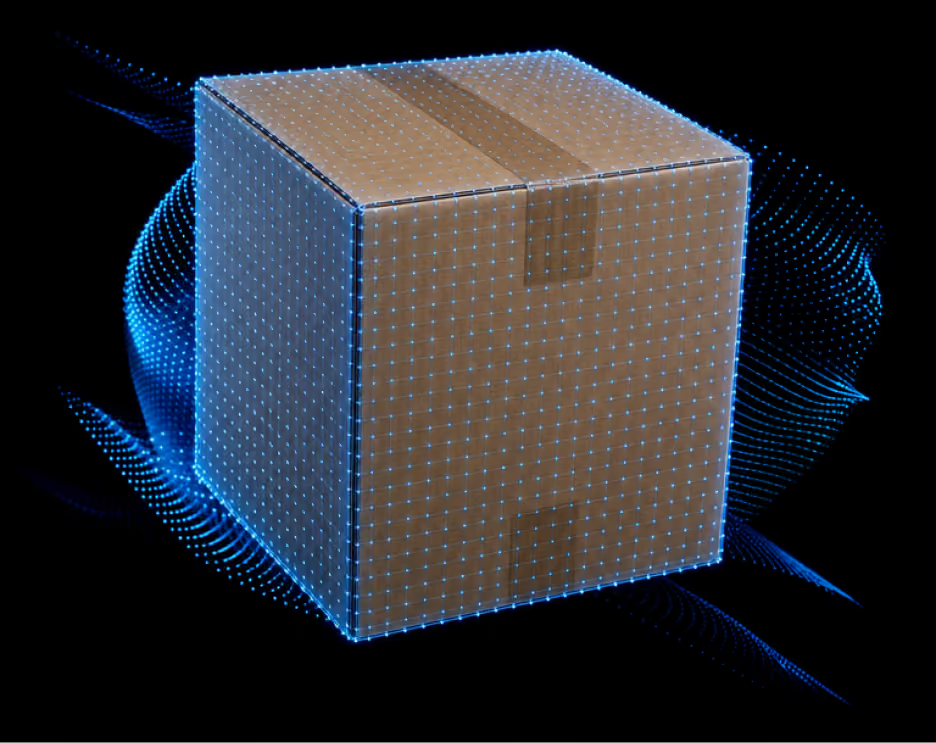
Every supply chain runs on physical movement: trucks, vessels, containers, railcars, and parcels carrying goods between trading partners. But in most enterprises, the data about that movement is fragmented across carrier portals, ELD platforms, freight forwarder dashboards, and TMS status screens. No single system holds a unified, real-time model of what is actually in transit.
The Shipment Twin changes that. It creates a continuously updated digital replica of every shipment moving through your supply chain, regardless of mode, carrier, or geography. It ingests data from the execution systems that initiate and manage physical movement (your TMS, carrier systems, freight forwarders, 3PLs) and enriches it with location signals from ELD devices, carrier APIs, mobile tracking, and EDI updates. On top of that raw signal, FourSight AI layers weather, traffic, port congestion, and historical carrier behavior to produce ML-powered predictive ETAs that improve as the shipment moves.
The result is not a tracking screen. It is a complete digital object representing the shipment: its origin, destination, current location, predicted arrival, exception status, carrier performance context, and the actions that Digital Workers have already taken on it. Every other twin, every agent, every dashboard, and every downstream system integration consumes from this single source of truth.
Supply Chain Objects Modeled
- Load / Shipment: The primary object. A single freight movement with a carrier, origin, destination, and one or more stops. Attributes include mode (TL, LTL, Parcel, Ocean, Air, Rail, Intermodal, Drayage, Final Mile), carrier SCAC, PRO number, BOL, booking reference, and commodity details.
- Stop: Each point in the shipment journey: pickup, intermediate stop, cross-dock, port of loading, transshipment, port of discharge, final delivery. Carries planned vs. actual timestamps, geofence events, dwell time, and appointment linkages.
- Carrier / Equipment: The entity performing the movement. Linked to tracking method (ELD, API, mobile, EDI), equipment type (dry van, reefer, container, railcar, aircraft), and historical lane performance.
- ETA / Prediction: A continuously refined arrival estimate for each stop. Incorporates live GPS, weather, traffic, port congestion, and the carrier's historical behavior on that lane (p50/p90/p99 transit distributions).
- Exception: Any deviation from plan: late departure, missed pickup, temperature excursion, stopped movement, detention threshold breach. Classified by root cause (carrier, weather, shipper, facility) using network intelligence.
Execution Systems Ingested
- TMS: Load tenders, planned shipments, carrier assignments, and planned stops from your TMS, whether a major platform or a custom system.
- Carrier Systems: GPS/ELD location pings, EDI status updates, carrier portal milestones, and ocean carrier AIS vessel positions.
- Freight Forwarders: Booking confirmations, multi-leg routing, container tracking, and customs clearance milestones.
- 3PL / Broker Systems: Shipment creation via API or SFTP, milestone updates, and proof-of-delivery documents.
- IoT and Telematics: Temperature sensors, door open/close events, and shock/tilt sensors for high-value or cold chain freight.
When you need this Twin
- Your logistics team manually checks carrier portals and calls dispatchers for shipment updates, consuming hours of labor that should be spent on exception management and strategic decisions.
- Late shipments are discovered reactively, after they have already impacted production schedules, appointment windows, or customer delivery commitments.
- You operate across multiple carriers, modes, and geographies, but each mode has its own tracking silo. There is no unified view of all in-transit freight.
- ETA accuracy is poor because existing systems rely on static transit times rather than live signals adjusted for weather, traffic, and actual carrier behavior.
- Carrier performance conversations during RFPs are based on self-reported data rather than objective, lane-level reliability evidence.
- Ocean shipments disappear into a black box after booking. No reliable container-level visibility between port of loading and port of discharge.
Core Capabilities
Capability | Description | |
Unified Multi-Modal Data Model | A single shipment object for all nine transportation modes. One API, one view, one set of events, regardless of mode. | |
ML-Powered Predictive ETAs | Arrival predictions trained on FourKites network data: lane-level distributions, carrier patterns, weather, traffic, port congestion. ETAs improve as the shipment moves. | |
Automated Exception Detection | Real-time identification and root-cause classification of late, at-risk, stopped, and temperature-deviated shipments. | |
Carrier Performance Intelligence | Objective reliability scoring by carrier, lane, mode, and season, built from actual outcomes across the FourKites network. | |
Agent-Ready Architecture | Tracy, Cassie, and Alan consume Shipment Twin data directly to trigger autonomous exception resolution, customer updates, and appointment adjustments. | |
Bidirectional System Sync | Status, ETAs, and exceptions flow back to your TMS, ERP, and WMS through standard APIs, webhooks, and EDI. | |
Frequently Asked Questions
One billion hours of operational work completed by AI agents over the next decade.